Friday, May 28, 2010

Memorial Day Memories


Two articles published recently (this week) about Memorial Day. Please take a moment to click on each link and visit the two sites. There are some similarities, but each article is different.

Blogcritics gave my article there a front page headline on Saturday, 5-28-2010.

The article over at Hubpages is longer and has more photos as well as related merchandise:

I hope these two pieces help you remember those who gave the ultimate for our freedom today. Many times veterans are heard to say, "If you can read this, thank a teacher. If you are reading it in English, thank a veteran." No matter what language you speak today, if you see a veteran, be sure to offer your appreciation.

We often hear that in war, the first casualty is the truth. Regardless of how the politicians behave and the decisions they make, or the motives that drive those decisions, the poor grunt in the trenches and foxholes has to live with them. I choose to honor the men and women in uniform who meet the enemy in person. What becomes of them?

Sunday, May 16, 2010

Football is in the air!


Not just because of Ben Roethlisberger. Most high schools have finished their spring training and graduation is just a couple of weeks away. Football officials are signing up for the fall and we start meetings in July. August and the first weeks of the next season are barely a hundred days away.

It's a good time to re-visit a couple of articles I've had published that relate.

The first applies to every area of our lives although I wrote it in the context of football.

Next comes an article that gives me a headache. Football helmets keep coming off!
You'll see in the article that both national and local organizations have promised to do something about it. So this season, we have a new rule. Officials have to watch for symptoms of concussions. A whole new can of worms!

Since October 22, 2009 I've had fifty articles published at Blogcritics.org and I hope you have or will enjoy many of them.

Thursday, May 6, 2010

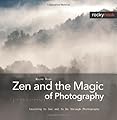
Book Review: Zen and the Magic of Photography by Wayne Rowe


Haiku: Pictures
by Bob Etier

The photographer
Sees an invisible world
and captures moments.

===================

I missed my exit. On the way home from work the other night, I drove right past my exit taking the same route as every night for over four years. Obviously this is a well known journey for me. I was aware of the other vehicles on the road and the operation of my own car. I was driving safely but my thoughts were elsewhere. This may not be the best analogy for a zen experience but it sure fits the mold for a somnambulist trance.

Since becoming a professional photographer, the most frequent compliment received involves my ability to "see" the subject with a different eye. "Oh, you see things I would have never noticed!" is a common remark. A major influence on my selection of subjects has for years been William Eggleston. Years ago someone said of his work, "He doesn't go out looking for the bizare, but he finds it in everyday situations." When an artist can produce work that elicits those type comments, it shows that he or she was "in the moment" when that piece was created.

A simple definition of zen is "meditation". Wikipedia says this of meditation: " a holistic discipline by which the practitioner attempts to get beyond the reflexive, 'thinking' mind into a deeper state of relaxation or awareness." We're back to "in the moment" now and it can apply to anything from motorcycle maintenance to religion to photography. Zen and the Magic of Photography is Wayne Rowe's offering on how to learn to see and to be through photography.

Dr. Rowe is a professional photographer and a professor of photography at Cal St. Tech in Pomona. His book consists of three parts. Part One deals with the image, zen, satori, haiku and their connections. Like Dr. Rowe, once I became "enlightened" it was clear that zen experiences have occurred for me and my Canon as well. I learned that seeing "with a different eye" can be described as making the "invisible visible". Chapter titles pique the readers interest with names like "Zen and the Empty Mind" or "The Role of Intuition and Feeling in Photography". My wife has written haiku for my images for years and Rowe's commentary on that aspect of zen really appealed to us.

Part Two encourages the reader to be open to all forms of the photograph from still to motion pictures. After a brief discussion of the "third effect", we're back to being in the moment. Covered here is a comparison of method acting as exemplified by James Dean and Marlon Brando to zen due to their "intuitive, spontaneous, realistic, and 'in the moment' style". Another example is the zen experience of a noted movie director as he films a climactic scene in Capote's In Cold Blood.

The concluding section offers examples from Dr. Rowe's own portfolio as well as others that illustrate his message. Analyses of the images by someone with Rowe's experience and love of his art make the book even more valuable to both the novice and seasoned professional. I especially enjoyed his comments on an iconic shot of James Dean at Times Square by Dennis Stock. Even a casual reader will quickly discover that Rowe has accomplished his goal to help us see and be through photography.

Would I buy this book? Yes, in a moment. It will help all photographers benefit from zen more often, and on purpose.

Friday, April 9, 2010

A Fragile Species - Guest Blogger


Today's guest blogger is my dear friend, Miriam Goldberg. She wrote this essay to accompany my entry [shown here, "Dead Zinnia"] into the Fragile Earth photo competition at Western Carolina U. My entry was one of 96 accepted in a field of over 500.
================

Haiku
Snowflakes fall then melt,
their time profoundly fleeting,
in them I see us.


A Fragile Species

Do you know how many species of life there are? How many have disappeared? How many are disappearing? If your answer is “yes,” let’s sit down to tea. Because only God knows answers to these questions. Man has never known with whom or what he shares planet Earth. Just as you may know many, but not all, of the people who live in your town, we have a rough idea of our global neighbors. We know that within our own species lie great mysteries which define our differences, and we willingly admit that there are things in nature that defy our understanding, yet we seldom let our ignorance prevent us from making dire pronouncements on the state of the planet or its inhabitants, both plant and animal.
When a species is added to an endangered list, numbers dictate its inclusion. Low numbers. Perhaps, though, one of Earth’s most fragile species numbers in the billions. A species with a sketchy survival instinct that could easily paint itself into oblivion—that’s us.
Save the tigers! Save the rainforest! Save the whales! Save the polar bears! The list sometimes seems endless. How about “Save yourself!”? Let’s save ourselves from those who predict the death of our planet by a new ice age or a global warming. Let’s save ourselves from those who predict our future based on a pond’s frog population or the number of butterflies that drown in the Gulf of Mexico each autumn. Let’s save ourselves from our own words and actions by finally seeing our purpose on Earth.
We, the arrogant “owners” of the planet, are more bird-brained than the lowliest of birds, if any bird could be considered lowly. In arrogance, we strut around like peacocks; we crow our reign over all things living as if any other species agrees we have more of a right to this space than they. We’re cuckoo, and we are on our way to dodo status. It’s time to think small, my non-feathered friend.

As a species we strive for more territory, more influence, more power, more comfort, more knowledge. How about more understanding? Instead of solving problems by creating problems (such as the DDT solution or the Ethanol solution), let’s solve problems by understanding and eliminating them. No one would seriously blame the extinction of a species on that species, but we seem bent on deserving that responsibility. Has there ever been a more self-destructive species than man?
We expand our territory to include areas that are hostile to us, then attempt to eradicate the hostility, whether by resettling human populations, relocating crocodilians and bears, building sound barriers, rerouting rivers, or any of our other often futile endeavors to recreate and rule our environment. We think big. We want more. When we create a problem, we don’t solve it, we hide it with another, bigger problem, and we keep doing it until it’s seemingly unsolvable. The planet, however, has a simple solution: extinction. The phrase appearing on the tombstone of the extinct Homo Sapiens should be, “All they wanted was more.”
Our footprints are large, but not ineradicable. We feel we have no borders, no limits; this earth is ours! We believe that we are the proprietors of the planet, the invincible rulers. How nature laughs at us. We are so mighty, our entire species can be taken down by a microscopic, nearly invisible entity. We, whose numbers are large and whose influence seems boundless, can be exterminated by a virus. Our history of reproduction, colonization, and victory is primitive compared to what a virus can accomplish. Or a bacterium. Or bug. While hikers may fear a bear encounter, or swimmers a shark, so many more of us succumb to attacks by predators we have invited by invading their territory.
We affect climate, we affect nature, we affect each other, but we blame all these things for their effect on us. We are as fragile as earthworms and fireflies; despite knowing we are mortal, we feel invincible. Therein is our weakness, our fatal flaw. Our footprint is large, but when we no longer walk this planet, the earth will quickly recover. Nature will overtake our cities, our homes, our factories, and malls. Birds will make nests in our plastic shoeboxes, cockroaches will eat our wallpaper, all species—known and unknown to us—will benefit from us having been here, but gone. And the planet—self-cleaning as it is—will eliminate the damage we have done, burying the indestructible with earthquakes, hurricanes, tsunamis, and all it has in its considerable arsenal, while life continues and makes use of our remains.

Tuesday, March 30, 2010

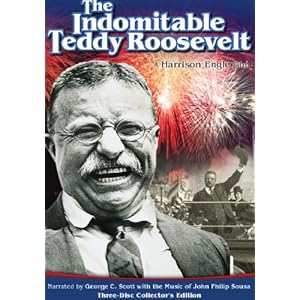
The Indomitable Teddy Roosevelt


They just don't make presidents like they used to! Harrison Engle's 1986 film makes it easy to suspend your disbelief and get caught up in the enthusiasm of one of the most popular presidents in history. This is a remarkable film of a remarkable man. Watching this DVD is like attending an open air band concert on the mall. Few men can match the variety, notoriety, and successes of his relentless efforts. Even fewer Presidents can compare with his accomplishments. He's even on Mount Rushmore! TR was awarded (posthumously by President Clinton) the Medal of Honor for his heroics in the Spanish American War in 1898. He is our only President to be so distinguished. Roosevelt was awarded the Nobel Peace Prize for the 1905 peace treaty between Russia and Japan. Something he actually accomplished -- not just promised.

The twenty-sixth President is described by narrator George C. Scott as a man of action who wanted the common man to have a fair chance and a square deal. Distrusted by liberals and feared by conservatives, TR was known more for the results he achieved than for promises, claims, and rhetoric. He personally authored over a dozen books (no ghost writers). He was an outdoorsman, naturalist, conservationist, and of course politician. During his term as President, the number of national parks doubled and he worked hard to get the Grand Canyon recognized as such. His trip to Panama made history as he became the first sitting president to travel outside the country. He is often regarded by historians and critics as one of the five best Presidents along with Washington, Lincoln, Jefferson and FDR.

Previously aired on Biography and The History Channel, The Indomitable Teddy Roosevelt will be available on DVD April 13, 2010 (from Infinity Entertainment Group). We can enjoy a tour de force documenting the life and times of America's youngest President. Enjoy a romp through history at the brisk pace of a Sousa march, which in fact accounts for much of the soundtrack. The film includes remarkable footage of historical events, still photos, and re-enactments in both black and white and color. The set includes three discs: the feature, an audio CD, Sophisticated Sousa, and a bonus DVD. (I've enjoyed the Sousa CD in my truck on the way to work for several days now.) The bonus disc includes an interview with the director, photo archive, "Teddyisms" (memorable quotes from TR), a biography of John Philip Sousa, and Roosevelt's 1905 inaugural address.

Would I buy The Indomitable Teddy Roosevelt? Yes! In a downbeat!

Tuesday, March 16, 2010

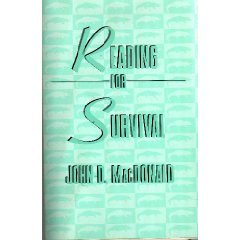
Reading for Survival


In a dangerous world filled with stress, the key to survival was memory. So says the author of The Executioners (later known as "Cape Fear"), John D. MacDonald. In his last published work before he died in 1986, MacDonald set out to inspire us with Reading for Survival. This thirty-one page essay was published in 1987 by the Center for the Book in the Library of Congress. It was also sponsored by the Florida Center for the Book in Fort Lauderdale. The essay takes the form of a series of conversations between his fictitious protagonist, Travis McGee, and his friend known only as "Meyer", an economist, teacher and lecturer. The opening scene finds the two in a docked houseboat darkened by a thunderstorm. The conversation begins, as does the authors opportunity to share with us his concerns for reading, readers, and non-readers.

Meyer guides us through his version of the evolution of communication beginning with our earliest ancestors' dependency on memory in order to live in the wilderness, recognize signs of nature and the animal kingdom, and then share that knowledge with future generations. Once the amount of information required was too massive for memory alone, we started making marks on pottery, then cave walls, and the next thing you know, Gutenberg got the masses involved with his press. Books became artificial memory before the gigabite arrived. Now we have tons of information and it's available to us at the speed of light. Google found over nine million results for "gutenberg", in 0.28 seconds. What do we do with all this information? Do we need that much? Consider Len Bias.

Len Bias was a talented basketball player at the University of Maryland. He was a senior during the same year that Michael Jordan was enjoying his second year in the NBA.
Bias was the second player drafted that year and went to the Boston Celtics. Two days after the draft, he died of a cocaine overdose. Kenneth Rosenau wrote in
The Palm Beach Post, "That [Bias]..was finishing his fourth year at an academically respected school without a prayer of graduating is also an outrage that should be addressed."And "[He]...was twenty-one credits short of having a degree." Was Bias any better off than the homo erectus who couldn't remember which snake was poisonous? Would his judgement have improved had he been a better student? Meyer asks, "Can one examine his own life without reference to the realities in which he lives?"

What about the non-reader, the person who wants to believe because he isn't well informed and doesn't understand the risks? He's the one "born every minute" that signs up for that variable interest loan with a dubious lender. MacDonald warns us of the teacher who promotes himself as the translator. Beware the translator who interprets the information for you. Think for yourself he suggests. Education, literacy, reading, thinking and remembering are MacDonald's prescription for enduring. He leaves us with a warning from Mark Twain, "The man who does not read good books has no advantage over the man who can't read them."

Encourage non-readers to enrich their lives and better comprehend the word around them -- by reading.

Friday, March 5, 2010

Book Review: "Promised Land: Thirteen Books That Changed America" by Jay Parini.


[Similar version was published first at http://blogcritics.org/books/article/book-review-promised-land-thirteen-books/ ]

"You know more than you think you do." So says an Olympic gold medal winner, and so begins a book that over sixty years later still influences the baby boomer generation. A book that espouses a kinder gentler approach to the journey from birth to adolescence. One of the founding myths/stories of our American heritage is the road trip. The story of two characters on a journey to freedom, either real or dreamed, the epitome of which, according to Hemingway, was penned by Mark Twain.

Since the Mayflower arrived in the New World, Americans have been on road trips. Whether it was the great unknown wilderness of Lewis and Clark or the quest for "it" as recounted by Kerouac, we've been searching. We learn from the journey and sometimes feel that when we have reached our destination, it stretches further out before us on the horizon. And we continue on. As individuals we continue the journey begun by our ancestors while seeking goals of our own along the way. Inspiration comes from our accomplishments and is driven by the efforts, desires, and dreams of previous generations passed along to us by oral family histories, diaries, journals, and books (both fiction and non-fiction).

A special collection of those books is celebrated in Promised Land: Thirteen Books That Changed America by Jay Parini. The author teaches college in Vermont and has a long list of credits that add up to "literary scholar". He sees "..poetry as the most important form of writing," and has several collections of poetry, novels and biographies to his credit.
His selection criteria in his own words, "I was looking for books that played a role in shaping the nation's idea of itself or that consolidated and defined a major trend." It is clear that this is not a collection of America's "greatest books". Choosing could only be made less difficult by narrowing the focus; he includes a list of one hundred works that also changed the country with a confession that another hundred could have easily been added.

Parini has chosen his baker's dozen well. Included are significant works from politics, religion, adventure, exploration and philosophy. These books are filled with stories--memorable legends of both fact and fiction that describe our many interconnected journeys and the diverse experiences that make us Americans. He suggests questions to help us ponder the trip. His analysis inspires us to come up with our own questions. How could a country founded on the notion that all men are created equal allow slavery? How can we not be thought to be crazy or depraved when we push the boundaries of acceptable behavior? How can we change someone else's attitude without giving offense or arousing resentment? How could women not be allowed to vote? How much individual freedom are we willing to give up to be able to say we live in a free country?

A chapter is devoted to each book and treats each with the same format. He offers a brief summary of how the book changed the country. Next is a biography of the writer and historical context of the book. If you have not read the book, you will enjoy the third portion, a detailed description of the book. In some cases he details individual chapters. Despite this occasional level of detail, he manages to keep each chapter to approximately twenty pages. A discussion of the books that followed in the wake of the subject work concludes each section. In some cases, books that came before or inspired this particular work are mentioned.

Prior to reading this book I had never considered the importance of "the road trip". It was enlightening to see the diversity in the types of trips, the parallel motives and lessons learned along the way. The most memorable benefit of this book for me was the connections that came to mind while reading. Many of the stories reminded me of other books I've read on my own journey. I can ride on the raft with Huck and Tom, stand on the shore with Eliza, enjoy Thanksgiving with the Pilgrims or ride a chopper with Dennis Hopper. I can participate in my country's grand experiment in self-governing and I can speak with confidence in front of a group. Somehow it's easier to bear my own cross down the road to the promised land because of the journeys of my ancestors and mentors. The books chosen by Parini helped me to see that they, along with many other books I've enjoyed, have not only changed America, they have changed my generation, shaped my thoughts and made me who I am. I read not only to learn, I read to survive.